
This article is for informational purposes only and does not constitute medical advice. Always consult a qualified healthcare provider.
Introduction
If you've been feeling chronically fatigued, noticing a drop in libido, struggling to build muscle, or just not feeling like yourself, low testosterone may be on your radar. Before any treatment conversation can begin, one thing has to happen first: you need a testosterone test. It sounds simple, but many men aren't sure where to start — their regular doctor, a specialist, a lab, or an online clinic. This guide cuts through the confusion and gives you a clear, step-by-step picture of how to get tested.
The Short Answer
Getting a testosterone test is straightforward. You need a blood draw that measures the testosterone circulating in your body — most commonly total testosterone, and often free testosterone alongside it. You can order this test through your primary care physician, an endocrinologist, a men's health or TRT clinic, or — in most U.S. states — directly through an online lab service without a doctor's visit.
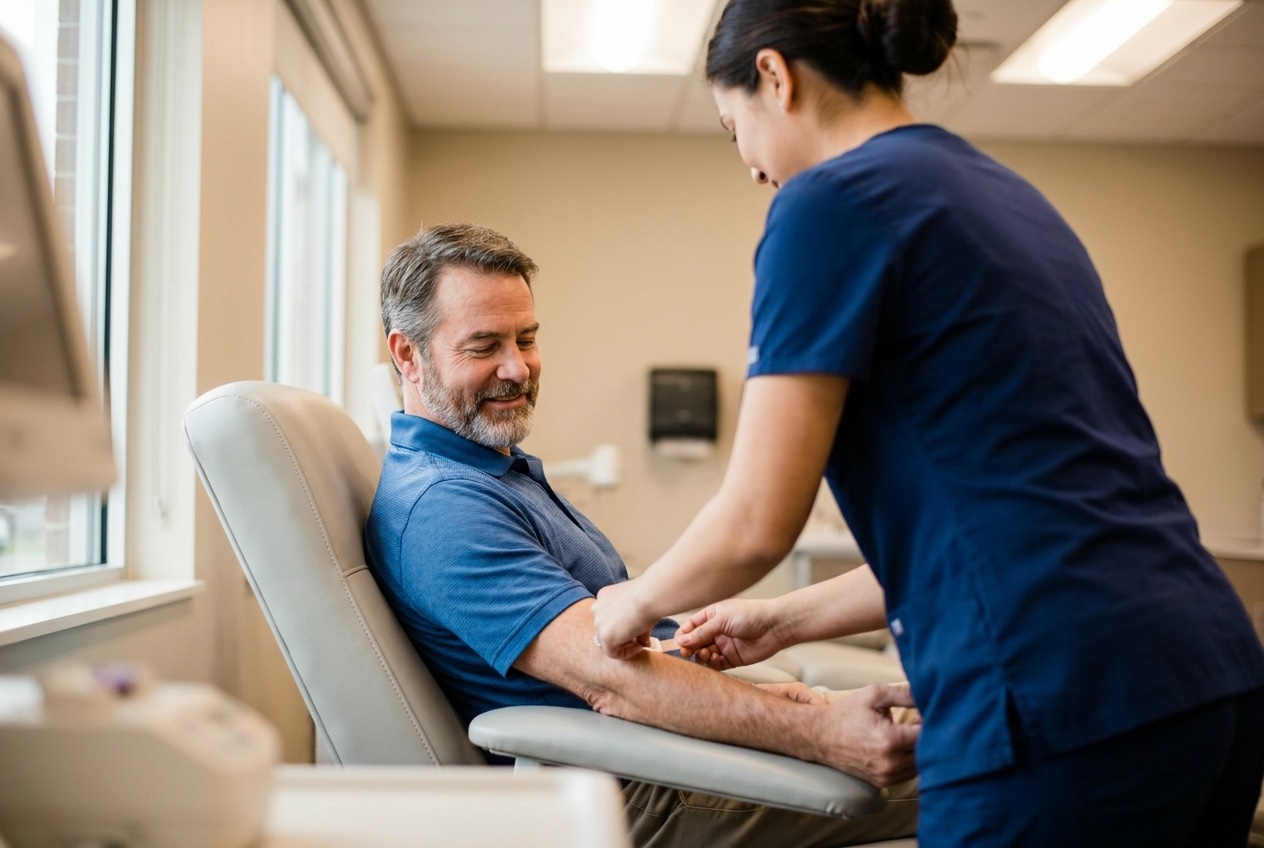
The test itself is a simple venous blood draw, typically done in the morning when testosterone levels are at their daily peak. Results are usually available within one to three business days. From there, a qualified provider reviews your numbers in the context of your symptoms and overall health to determine whether low testosterone is a factor and whether treatment makes sense for you.
The fastest, most direct route for most men researching TRT is to contact a men's health or TRT-specialized clinic. These providers are set up specifically for this evaluation and can often order labs, review results, and discuss treatment options in a single streamlined appointment — many of which are now available via telehealth.
The Details
Testosterone testing is done through a standard blood panel. A phlebotomist draws a small sample from a vein, usually in the arm, and the sample is analyzed by a laboratory. The key markers most providers look at include:
- Total Testosterone: The overall amount of testosterone in your bloodstream, both bound and unbound to proteins.
- Free Testosterone: The biologically active portion not bound to proteins, which is often more clinically meaningful when total levels look borderline.
- Sex Hormone-Binding Globulin (SHBG): A protein that binds testosterone and affects how much is actually available to your cells.
- Luteinizing Hormone (LH) and Follicle-Stimulating Hormone (FSH): These help determine whether low testosterone originates in the testes or in the brain's signaling pathway.
- Complete Blood Count (CBC) and Metabolic Panel: Often included to establish a baseline before any treatment begins.
Timing matters. Testosterone follows a diurnal rhythm, peaking in the early morning hours — typically between 7 and 10 a.m. — and declining through the afternoon. For the most accurate reading, most guidelines recommend getting your blood drawn before 10 a.m. Strenuous exercise, alcohol consumption, illness, or poor sleep the night before can also affect results, so it's worth going into the test under reasonably normal conditions.
If your first result comes back low, most providers will confirm it with a second test on a separate day before making any clinical decisions. A single low reading alone is generally not enough to diagnose hypogonadism or initiate treatment.
Key Factors That Affect the Answer
Where You Live
Direct-to-consumer lab testing is available in most U.S. states, allowing you to order a testosterone panel online and visit a local draw center without a physician's order. A small number of states restrict this, so it's worth checking your state's rules.
Your Symptoms
A provider experienced in men's health will evaluate your lab results alongside your symptoms — fatigue, low libido, brain fog, mood changes, reduced muscle mass, or increased body fat. Numbers alone don't tell the whole story. A man with a "normal" total testosterone reading but significant symptoms and low free testosterone may still be a candidate for further evaluation.
Your Age and Baseline Health
Testosterone declines naturally with age, typically by about one to two percent per year after age 30. Pre-existing conditions such as obesity, type 2 diabetes, or sleep apnea can also suppress testosterone levels. These factors influence how a provider interprets your results.
Cost and Insurance
Many primary care physicians will order a testosterone test, and insurance may cover it if you present with relevant symptoms. TRT clinics often offer bundled lab panels at a flat rate. Direct-to-consumer lab services typically charge between $30 and $100 for a basic testosterone panel without insurance.