
This article is for informational purposes only and does not constitute medical advice. Always consult a qualified healthcare provider before starting any treatment.
Introduction
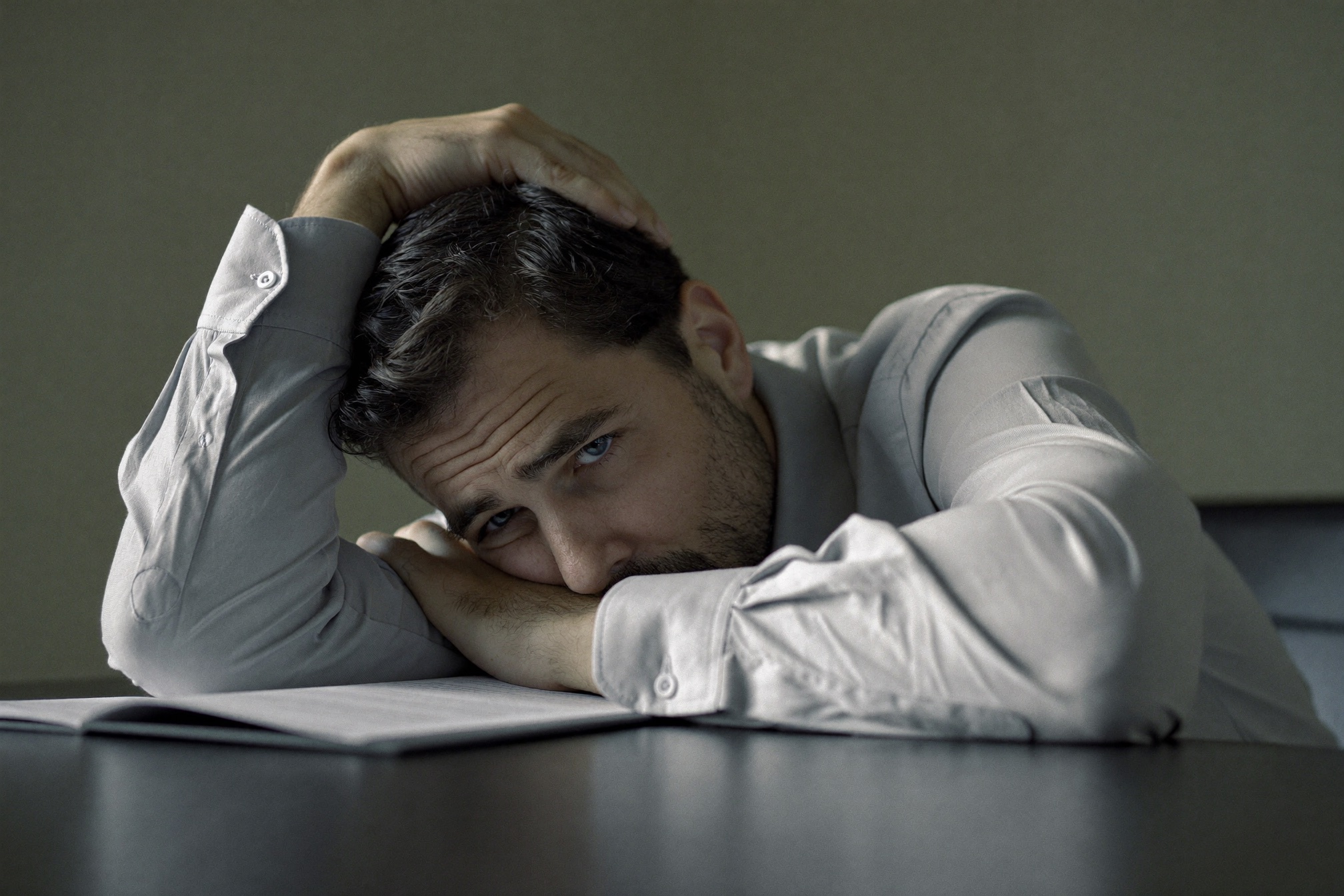
You wake up with a knot in your chest before the day has even started. Your mind races through worst-case scenarios at work, at home, in relationships — and no matter how many deep breaths you take, the unease just will not lift. You have tried cutting back on coffee, sleeping more, even downloading a meditation app. Still, the anxiety persists. What if the problem is not entirely in your head — but in your hormones?
For many men, chronically low testosterone is a silent but significant contributor to anxiety, mood disturbances, and a general sense that something is simply "off." Because anxiety is so often chalked up to stress or personality, the hormonal angle is frequently overlooked — sometimes for years.
This article breaks down the relationship between low testosterone and anxiety in men: what the science says, how common this overlap is, what tests you should ask for, and what your treatment options look like, including testosterone replacement therapy (TRT).
The Testosterone Connection
Testosterone is far more than a muscle-building hormone. It plays a direct role in regulating mood, cognition, and the body's stress response. When testosterone levels fall below the normal range, the neurological effects can be profound.
How Low Testosterone Affects the Brain and Nervous System
Testosterone interacts with several key systems involved in mood regulation:
- Serotonin and dopamine pathways: Testosterone helps modulate neurotransmitters that govern feelings of well-being and calm. Lower levels can reduce the efficiency of these pathways, making anxiety more likely.
- The HPA axis: The hypothalamic-pituitary-adrenal axis governs the body's cortisol response to stress. Research suggests that low testosterone can dysregulate this system, leaving men in a heightened, hypervigilant state.
- GABA receptor sensitivity: Testosterone metabolites, particularly allopregnanolone, influence GABA receptors — the same receptors targeted by anti-anxiety medications. When testosterone is low, this natural calming mechanism is weakened.
- Amygdala reactivity: Studies have shown that testosterone can temper the reactivity of the amygdala, the brain's fear-processing center. Low testosterone may increase amygdala sensitivity, amplifying the perception of threat.
The result is a neurochemical environment that is simply more fertile for anxiety — not because of weakness or poor coping skills, but because of measurable biological changes.
How Common Is This Among Men?
Low testosterone, clinically known as hypogonadism, affects an estimated 2 to 4 million men in the United States, though many go undiagnosed. Testosterone levels naturally begin to decline at roughly 1 to 2 percent per year after the age of 30, meaning that by their 40s and 50s, a significant portion of men are operating below optimal hormonal levels.
The connection to anxiety is well-documented. Multiple studies have found that men with clinically low testosterone report higher rates of generalized anxiety, irritability, and psychological distress compared to men with normal levels. One large-scale analysis published in endocrinology literature found that men with hypogonadism had significantly elevated rates of anxiety disorders compared to age-matched controls.
It is also worth noting that anxiety itself can suppress testosterone production — creating a feedback loop where low testosterone worsens anxiety, and anxiety further lowers testosterone through elevated cortisol.
Other Causes to Rule Out
Low testosterone is an important piece of the puzzle, but anxiety is a multifactorial condition. A responsible evaluation should also consider:
- Thyroid dysfunction: Both hypothyroidism and hyperthyroidism can produce anxiety-like symptoms and must be screened with a thyroid panel.
- Adrenal imbalances: Chronically elevated cortisol from adrenal dysfunction can mimic or worsen anxiety.
- Sleep disorders: Obstructive sleep apnea is significantly more prevalent in men and both disrupts sleep quality and suppresses testosterone production.
- Cardiovascular disease: Heart arrhythmias and other cardiac issues can cause sensations that trigger or amplify anxiety.
- Nutritional deficiencies: Low magnesium, vitamin D, and zinc have each been independently associated with both low testosterone and mood disturbances.
- Mental health conditions: Generalized anxiety disorder, PTSD, and depression can exist independently of hormonal status and require their own assessment and treatment.
A thorough evaluation does not treat these possibilities as either/or — they often coexist and can compound one another.
Getting Diagnosed
If you suspect low testosterone may be a factor in your anxiety, the first step is getting properly tested. Many men are surprised to learn that a standard annual physical does not automatically include a testosterone panel.
Tests to Ask Your Doctor About
- Total testosterone: The baseline measurement. Most labs flag levels below 300 ng/dL as low, though symptoms can appear in men with levels between 300 and 400 ng/dL.
- Free testosterone: Only a fraction of testosterone is biologically active. Free testosterone levels can reveal deficiency even when total testosterone appears borderline normal.
- Sex hormone-binding globulin (SHBG): High SHBG binds more testosterone, reducing what is available to your tissues.
- LH and FSH: Luteinizing hormone and follicle-stimulating hormone help identify whether low testosterone originates in the testes or in the pituitary gland.
- Thyroid panel (TSH, Free T3, Free T4): To rule out thyroid-driven symptoms.
- Comprehensive metabolic panel and CBC: To assess overall health markers that influence hormonal balance.
Testing should ideally be done in the morning, when testosterone levels are naturally at their peak. Two separate low readings are generally required before a clinical diagnosis of hypogonadism is made.