
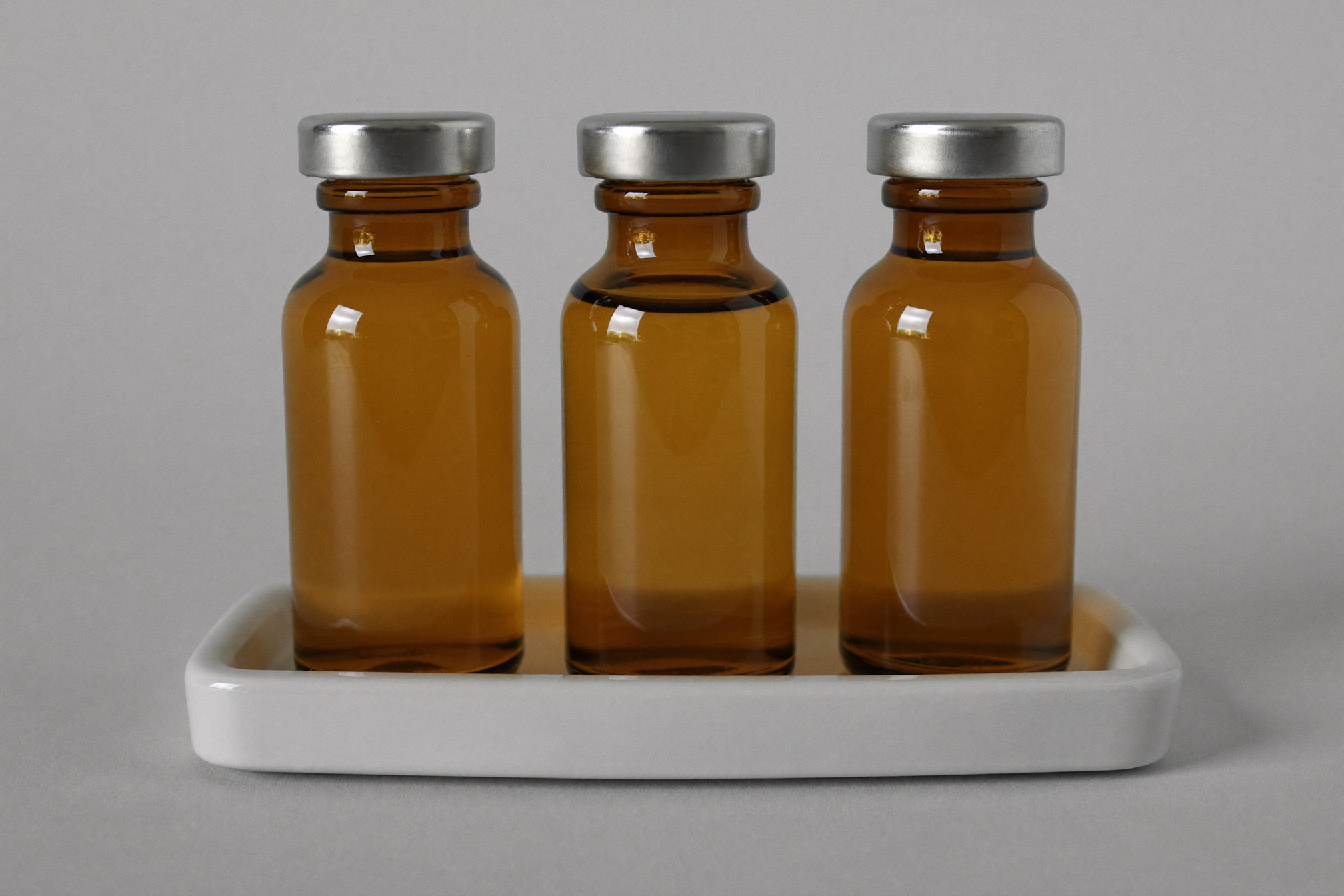
Compounded testosterone is legal when a licensed pharmacy prepares it under a valid prescription and state board oversight, and it typically costs far less than brand-name products. But "compounded" also means the finished product itself was never reviewed by the FDA for safety, effectiveness, or quality, which is a real tradeoff worth understanding before you fill a prescription through a telehealth clinic.
What "compounded" testosterone actually means
Compounding is the practice of a pharmacist or physician preparing a customized medication for an individual patient, rather than dispensing a mass-manufactured, FDA-approved product straight from the box. Section 503A of the Federal Food, Drug, and Cosmetic Act governs this for pharmacies compounding patient-specific prescriptions under state board of pharmacy oversight, while Section 503B covers larger "outsourcing facilities" that compound in bulk, register with the FDA, and follow current good manufacturing practice standards (FDA, 2024).
Most telehealth TRT platforms fill prescriptions through 503A pharmacies rather than dispensing commercially manufactured brand-name testosterone. That is where the cost savings come from, and it is also where the regulatory gray area lives.
Is compounded testosterone legal?
Yes, with an important caveat. Testosterone itself is an FDA-approved active ingredient, sold as branded and generic injections, gels, and pellets. FDA guidance generally restricts a 503A pharmacy from compounding a drug that is "essentially a copy" of a commercially available product, unless the prescriber documents a specific clinical reason an individual patient needs something different, such as a preservative-free formulation, a non-standard concentration, or an added ingredient like anastrozole in the same vial.
That rule is under active political pressure. In December 2025, Representatives Rudy Yakym and André Carson introduced the Safeguarding Americans from Fraudulent and Experimental (SAFE) Drugs Act of 2025 (H.R. 6509), which would raise the threshold for how many "essentially a copy" prescriptions a 503A pharmacy can fill per month, add annual reporting requirements for compounders shipping to out-of-state patients, and require pre-compounding inspections at large 503B outsourcing facilities (Dykema, 2025). The bill was written mainly in response to compounded GLP-1 weight-loss drugs, but its "essentially a copy" and interstate reporting provisions would apply to any 503A compounding model, including the testosterone cypionate blends many telehealth TRT companies ship nationwide.
Is compounded testosterone safe?
The active ingredient in compounded testosterone cypionate is the same molecule used in FDA-approved injectable testosterone, and compounding pharmacies operate under USP sterile and non-sterile compounding standards, with state board inspections. The gap is not the hormone itself. It is that the specific finished product, at the specific concentration and with whatever else has been added to the vial, was never independently tested by the FDA for potency, sterility, or stability the way a commercially manufactured product is.
The clearest evidence on this comes from a 2020 report the FDA commissioned from the National Academies of Sciences, Engineering, and Medicine, which reviewed compounded bioidentical hormone therapy, including testosterone. NASEM found a lack of rigorous, well-controlled clinical evidence behind marketing claims that compounded hormones are safer or more effective than FDA-approved versions, and noted that federal and state oversight of these preparations is limited compared to approved drugs (FDA, 2020). That does not mean compounded testosterone is dangerous. It means the claim that it is equally well-studied is not accurate, and patients should treat it as a different risk category rather than an identical substitute.
How much does compounded testosterone actually cost?
This is where the appeal comes from. A retail cash-pay vial of FDA-approved generic testosterone cypionate runs roughly $24 to $60 with a standard discount coupon, depending on vial size and pharmacy (GoodRx, 2026). Brand-name Depo-Testosterone for the same molecule typically costs two to three times more.
Telehealth clinics that compound testosterone rarely sell just the vial. Most bundle the prescription into a flat monthly subscription that also covers lab work, provider visits, and sometimes ancillary medications like anastrozole or HCG, and those bundles commonly run $100 to $250 a month. So the honest cost comparison is not "compounded versus brand name," it is "a compounded-plus-subscription telehealth model versus a local prescriber paired with a retail pharmacy coupon." Depending on how often you need labs and visits, either can end up cheaper. Our 2026 TRT cost breakdown walks through real pricing by delivery method if you want the fuller picture.